

Picture the journey that built the affiliate web. A reader searches "best robot vacuum", clicks a publisher's review, follows the tracked link to a retailer, buys, and the publisher earns a commission on that sale. Agentic shopping collapses that chain. The shopper now asks an assistant, the assistant reads the same review to shortlist a product, and the purchase completes inside the conversation. The publisher's page is consulted but never loaded, and its affiliate link is never clicked. The commission that depended on a last click has nowhere to attach. That is the structural problem, and it is arriving at the same moment that the largest affiliate network on the web is cutting what it pays on the clicks that still happen.
What is agentic shopping?
Agentic shopping is the pattern where an AI agent - ChatGPT, Gemini, Perplexity, Amazon's own shopping assistant and the browsers built around them - handles the research, comparison and increasingly the checkout on a shopper's behalf. The user describes intent in natural language, the agent reads across product pages, reviews and buying guides to build a shortlist, and then either hands back a recommendation or completes the transaction in-line. Forrester has described the endpoint bluntly: zero-click search is coming for checkout. The conversation becomes the storefront, and the sequence of page-loads that publishers monetise - the review click, the retailer click, the tracked purchase - is compressed into a single exchange the publisher never sees.
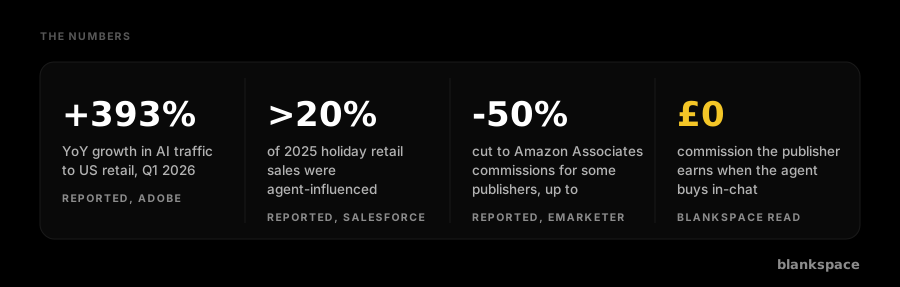
The direction of travel is now measurable rather than speculative. Adobe Analytics reported that AI-sourced traffic to US retail sites rose 393% year on year in the first quarter of 2026, and jumped 693% over the 2025 November-to-December holiday period, with AI-referred retail traffic roughly doubling across the year. Salesforce estimated that AI agents influenced more than a fifth of all global online retail sales during the 2025 holiday season. The shopper is increasingly reaching the checkout through an agent, not through a publisher's link.
How does agentic shopping break the affiliate model?
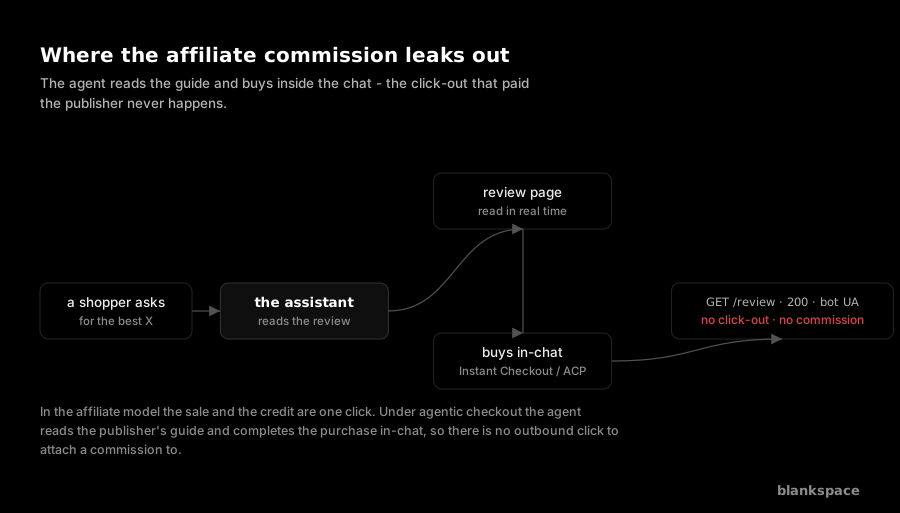
The affiliate economy runs on last-click attribution. A commission is paid because a specific tracked link was the last thing the buyer clicked before purchasing, and the cookie or tag dropped by that click is what ties the sale back to the publisher. Agentic shopping removes the click. When an agent reads a publisher's "best of" guide to inform a recommendation and then routes the buyer straight to a merchant - or checks out inside the conversation through an integrated payment flow - there is no outbound click from the publisher's page, no tracking parameter carried into the retailer, and therefore no attributable sale. The publisher's content did the work of persuading the shopper, but the mechanism that credited that work has been bypassed.
This is the affiliate analogue of the AI Overviews traffic problem publishers already know. In search, the AI answer strips the ad impression from the page-load that no longer happens. In shopping, the agent strips the affiliate click from the purchase that still happens. The value the publisher created - the comparison, the tested recommendation, the trust - is consumed, but it is consumed one layer above the open web that supplied it, where no attribution reaches back down.
What actually changed in 2026?
Two developments turned a slow trend into a live revenue question. The first is agentic checkout maturing on the demand side. OpenAI launched Instant Checkout in September 2025 with Etsy, Instacart and Walmart, built on the Agentic Commerce Protocol it developed with Stripe; Perplexity followed with Instant Buy and PayPal in November 2025 across merchants on BigCommerce and Wix. Not every early integration worked - OpenAI wound down its first Shopify-based Instant Checkout in March 2026 after only around thirty merchants had integrated and conversion and accuracy fell short - but the standards, the payment rails and the merchant appetite are now in place, and Amazon, Google and the assistant makers are all building agent-led buying into their own surfaces. Amazon retired its standalone Rufus shopping chatbot on 13 May 2026 and folded the capability into Alexa for Shopping, and began seeding sponsored placements inside those AI shopping prompts, with paid ad units expected to follow later in the year.
The second development hits publishers directly in the wallet. Amazon quietly cut Associates affiliate commissions by up to 50% for some publishers through 2026, rolling the reductions out to US publishers around March without an announcement, according to reporting by eMarketer and Adweek. Categories that previously paid up to 10% fell to as low as 4% to 5%, milestone-based incentive tiers that rewarded volume were removed, and Amazon also cut the reporting publishers rely on, raising the sales threshold for tracking-ID-level data, removing SKU and ASIN-level detail and revoking access to some premium APIs. Publishers described the changes as part of an Amazon directive to lower program costs by around 20%, and at least one deal-focused site said it now expects its 2026 Amazon revenue to come in 50% below projection.
Why affiliate publishers are exposed twice
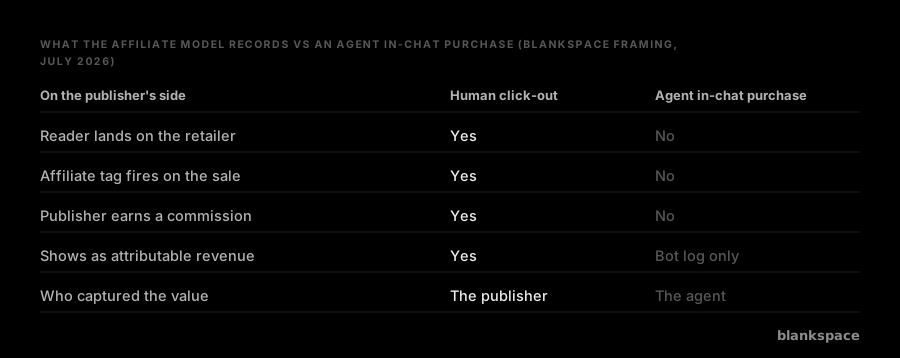
Put the two together and the exposure is not additive, it is compounding. On one side, agentic shopping removes the click that earns the commission. On the other, the dominant network is cutting the commission on the clicks that remain. A review site is squeezed whether or not the buyer still comes through a link: if the agent handles the purchase, there is no commission at all; if the human still clicks, the rate has been halved. The disconnect is stark against the market's own growth. eMarketer projects affiliate-driven retail sales rising from around $181bn in 2026 to $232bn in 2029, so the channel is not shrinking - the payout to the publishers who feed it is. The commercial content that recommends products is being asked to do more work for less credit and less pay.
There is also a control dimension that publishers cannot influence from their own pages. The platforms are actively contesting who is allowed to shop through whose surface: a San Francisco court granted Amazon a preliminary injunction in March 2026 blocking Perplexity's Comet browser from completing purchases on Amazon, on the argument that the agent disguised automated sessions as human traffic. Whichever way those fights resolve, the shopper's journey is being renegotiated between platforms and agent makers, and the publisher whose content informs the decision is not at the table.
What can affiliate publishers do about it?
The defensive moves are the familiar ones and they still matter: diversify beyond a single network so no one platform's rate card can halve your revenue overnight, negotiate direct merchant and brand deals where your audience justifies it, and build first-party relationships - newsletters, memberships, owned commerce - that do not depend on a tracked click surviving an agent. Making product content genuinely machine-readable also helps at the margin, because an agent that can cleanly parse your recommendation is more likely to surface your brand as the source, even if it will not always send a click.
The structural gap those moves do not close is the read itself. When an agent consults your buying guide to compose a recommendation, that consultation is a real, valuable event - it is the moment your content shapes a purchase - but it renders no page, no ad and no affiliate link, so nothing is attributed or paid. This is the read blankspace is built to monetise. By operating at the CDN edge, blankspace detects the Live Search Agent request as it reads the page and turns that agent consultation into an attributable, paid event, rather than an invisible one. It does not replace the affiliate link for the human who still clicks; it captures the agent read that the affiliate link can no longer see. As agentic shopping moves more of the purchase journey into the conversation, the edge read becomes the part of the funnel a publisher can still meter and monetise, and the affiliate commission becomes the part that increasingly slips away.
Frequently asked questions
Does agentic shopping mean affiliate marketing is dead?
No, but its centre of gravity is shifting. Affiliate-driven retail sales are still forecast to grow through 2029, and human shoppers still click tracked links. What is changing is the share of purchases that route through an agent instead of a click, and the rate networks are willing to pay on the clicks that remain. Publishers who depend on a single network for last-click commissions are the most exposed; those with diversified, first-party and direct-deal revenue are more insulated.
Why did Amazon cut affiliate commissions in 2026?
Amazon reduced Associates commissions by up to 50% for some publishers, moving categories that paid up to 10% down to as low as 4% to 5% and removing volume incentive tiers, according to eMarketer and Adweek. Publishers characterised it as part of a directive to cut program costs by around 20%. The cuts were rolled out to US publishers around March 2026 without a public announcement, alongside reductions in the reporting detail Amazon provides.
Do publishers get paid when an AI agent uses their content to recommend a product?
Generally not through the affiliate channel. If the agent reads a publisher's review to inform a recommendation and the purchase completes without an outbound click on the publisher's tracked link, there is no last-click attribution and no commission. The content influenced the sale, but the mechanism that credits publishers depends on a click that the agent flow removes.
How is agentic shopping different from AI Overviews for publishers?
They are the same disintermediation applied to different revenue streams. AI Overviews strip the page-load and the ad impression from the search journey; agentic shopping strips the outbound click and the affiliate commission from the purchase journey. In both cases the publisher's content is consumed to compose an answer, and in both cases the value is captured above the open web rather than shared back with the source.
How can a publisher monetise an agent read that never becomes a click?
By capturing it at the infrastructure layer rather than waiting for a click that will not arrive. blankspace operates at the CDN edge, detects the Live Search Agent request when an agent reads the page, and turns that read into an attributable, paid event. It sits alongside affiliate and advertising revenue rather than replacing them, and it targets exactly the part of the shopping funnel - the agent consultation - that affiliate tracking can no longer see.