

The figure that should reset the strategy is this: across the first four months of 2026, around 68 per cent of Google searches ended without a single click to any website, and among the searches that trigger an AI Overview that share rises to roughly 83 per cent, on Similarweb's numbers. When the answer is finished on the results page, chasing the click with harder SEO fights a battle the interface has already settled. The useful question is what you can still influence, and there are three levers: protect the visits that remain genuinely high in intent, become the source AI systems cite when they answer in your place, and earn from the AI agents now reading your content directly instead of letting that read stay free.
How much traffic has actually been lost
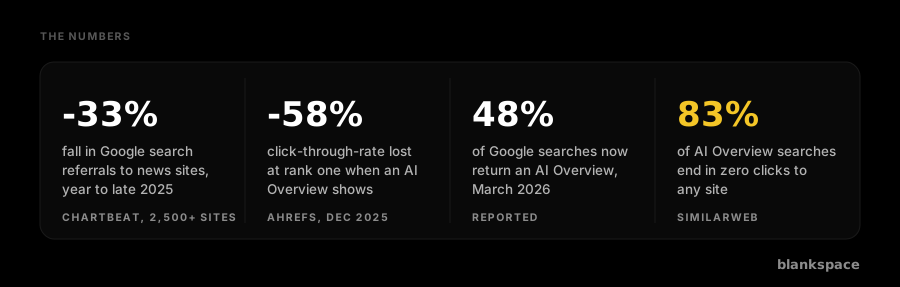
The decline is large, recent, and documented by named sources rather than anecdote. Chartbeat, tracking more than 2,500 news sites, found Google search referrals down about 33 per cent globally in the year to late 2025, with United States publishers hit harder at around 38 per cent. Ahrefs, in an update published in December 2025, put the click-through-rate hit for a top-ranking page at 58 per cent when an AI Overview is present, nearly double the 34.5 per cent it measured in April 2025. Pew Research approached it from the user side: when an AI Overview appeared, people clicked a traditional search result in roughly 8 per cent of visits, against about 15 per cent when no Overview was shown, and the click-through on the Overview's own citation links sat near 1 per cent.
The spread across publishers is wide. Digital Content Next reported that most of its members saw losses between 1 and 25 per cent, while some individual sites reported drops beyond 75 per cent on affected content. The reach of the feature explains the scale: AI Overviews appeared on more than 48 per cent of Google searches by March 2026, up from around 6.5 per cent a year earlier. Different studies produce different headline numbers - Pew's 47 per cent relative CTR decline, Ahrefs' 58 per cent at position one, Seer Interactive's 61 per cent for AI Overview queries - because they measure different things, but they all point the same way.
Why the old traffic is not coming back
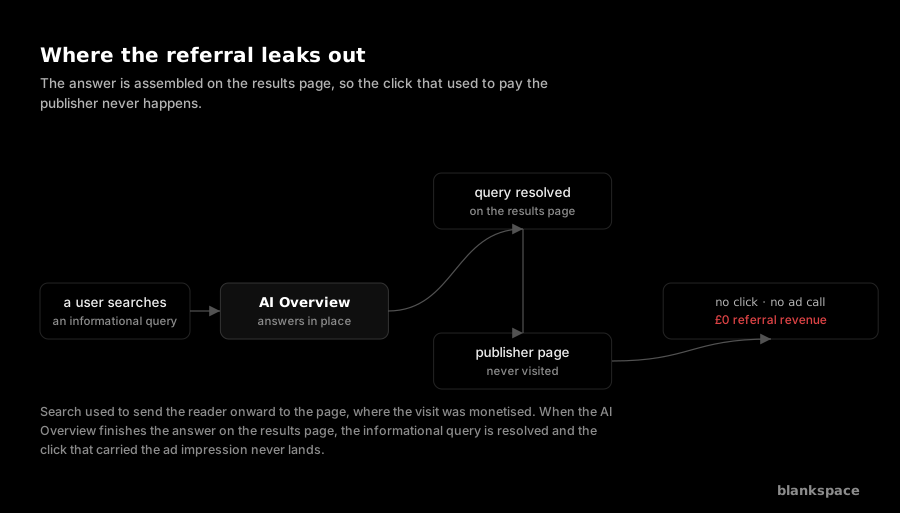
AI Overviews and AI assistants change the underlying deal, not just the ranking. Search used to act as a directory that sent users onward to publisher pages, where the visit was monetised. Increasingly the answer is assembled and delivered inside the search or chat interface itself, drawing on publisher content without sending the reader anywhere. Informational and how-to queries, which historically carried strong display CPMs, are the easiest for a model to satisfy in place, so they lose their clicks first. Optimising harder for a position users no longer click does not restore the revenue, because the loss is a change in what the page does, not in where it ranks.
The legal system is now testing the same premise. Penske Media, publisher of Rolling Stone and The Hollywood Reporter, is pursuing an antitrust claim arguing that Google has shifted "from being a search engine that sends traffic to websites to an answer engine that removes the incentive to click", and Chegg has brought a related suit tying its traffic and revenue decline to AI Overviews. Google has responded with interface changes such as further-exploration links and subscription labels, but these adjust the presentation rather than reverse the mechanism. Publishers should plan for a world in which the answer stays on the results page.
Do AI chatbot referrals fill the gap
No, and it is important to be precise about the size of the shortfall. Chartbeat data reported through Nieman Lab in March 2026 put AI sources - ChatGPT, Gemini, Claude, and Perplexity combined - at under 1 per cent of publisher pageviews, and Nieman Lab's own figure was 0.7 per cent over the preceding year. The trajectory is steep, with ChatGPT referrals up more than 200 per cent between December 2024 and December 2025, but a large percentage rise on a very small base does not offset a double-digit decline in the channel that used to send the majority of discovery traffic. Treating chatbot referrals as the replacement for search is a planning error; they are a growing sliver, not a substitute.
The three-part response
Protect the high-intent traffic that remains
Not all traffic is equally exposed. Transactional and high-intent pages, where a user wants to compare, buy, or complete something a summary cannot finish, still attract clicks because the reader needs to act. Concentrate effort there, strengthen those pages, and accept that thin informational content is the most cannibalised category and the least worth defending on its own. In parallel, build direct relationships through newsletters, apps, and registered audiences so that a growing share of reach no longer depends on a search referral at all.
Become the source AI systems cite
If the user gets their answer from an AI, the goal shifts from ranking for a click to being the source the AI names. This is the discipline of generative engine optimisation. Content that earns citations tends to be well structured, factual, clearly attributed, and recently updated, with a direct answer near the top and a clean, parseable layout. Being cited keeps your brand in front of the user even when the click does not happen, and it is the foundation the third lever depends on.
Open a revenue line from AI agent traffic
The same shift that took the search clicks also sends AI agents to read your content directly. Live Search Agents behind ChatGPT, Perplexity, Claude, and Gemini fetch pages in real time to answer user questions, and today that read usually generates nothing, because the agent runs no JavaScript and triggers no ad call. This is a new and growing audience arriving at the moment of research and intent. blankspace intercepts Live Search Agent retrievals at the CDN edge and runs a real-time auction to inject a relevant brand fact into the content the agent reads, attributing the revenue the same day. It does not recover the lost human clicks, but it turns the AI traffic that replaced them into income rather than cost.
What to measure now
Standard analytics understate the problem, because they cannot see agents that do not execute JavaScript. Add server-side or edge measurement so AI agent traffic sits alongside human traffic in the same view. Track which pages AI systems retrieve most often, whether your content is being cited in AI answers and by which engines, and how your high-intent pages are holding up against your informational pages. Those three readings tell you where to defend, where to optimise for citation, and where the new revenue opportunity is largest.
Frequently asked questions
Is the traffic lost to AI Overviews recoverable?
Not in its previous form. AI Overviews answer queries on the results page, so the clicks they remove do not return through better SEO. The recoverable value lies elsewhere: defending high-intent pages, getting cited in AI answers, and monetising the AI agent traffic that now reads your content directly.
How much has Google referral traffic actually fallen?
Chartbeat measured Google search referrals to news sites down about 33 per cent globally in the year to late 2025, and around 38 per cent in the United States. Ahrefs put the click-through-rate loss for a top-ranking page at 58 per cent when an AI Overview is present. Individual publishers report anything from single digits to more than 75 per cent depending on how exposed their content is.
Do AI chatbot referrals make up for lost Google traffic?
No. Chartbeat and Nieman Lab data put combined referrals from ChatGPT, Gemini, Claude, and Perplexity at under 1 per cent of publisher pageviews in early 2026. They are growing quickly from a small base but do not come close to offsetting the search decline.
Which content is hit hardest by AI Overviews?
General informational and how-to content, because a model can answer it in place. Transactional and high-intent pages retain more clicks because the user still needs to complete an action a summary cannot finish.
What is the difference between AI Overviews traffic and AI agent traffic?
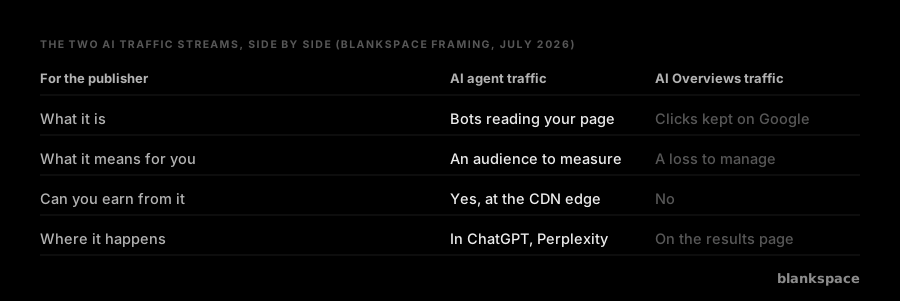
AI Overviews reduce the clicks that reach your site from Google's results page. AI agent traffic is a separate stream of bots that fetch your pages directly to answer questions inside tools like ChatGPT and Perplexity. The first is a loss to manage; the second is an audience you can measure and monetise.
How do I monetise the AI agents reading my content?
Through content-layer advertising at the CDN edge, which inserts a paid contextual brand mention into the text an agent retrieves. Because agents skip JavaScript, the edge is the layer that can earn from them, and it requires no change to your CMS or your human-facing ad stack.